In this home, the wide window is more than a background. It gives the rooms their orientation and changes how each piece of furniture is used. A desk sits close to the light, a round table faces the trees and low glass surfaces carry reflections from morning into evening. The arrangement grows outward from the view.
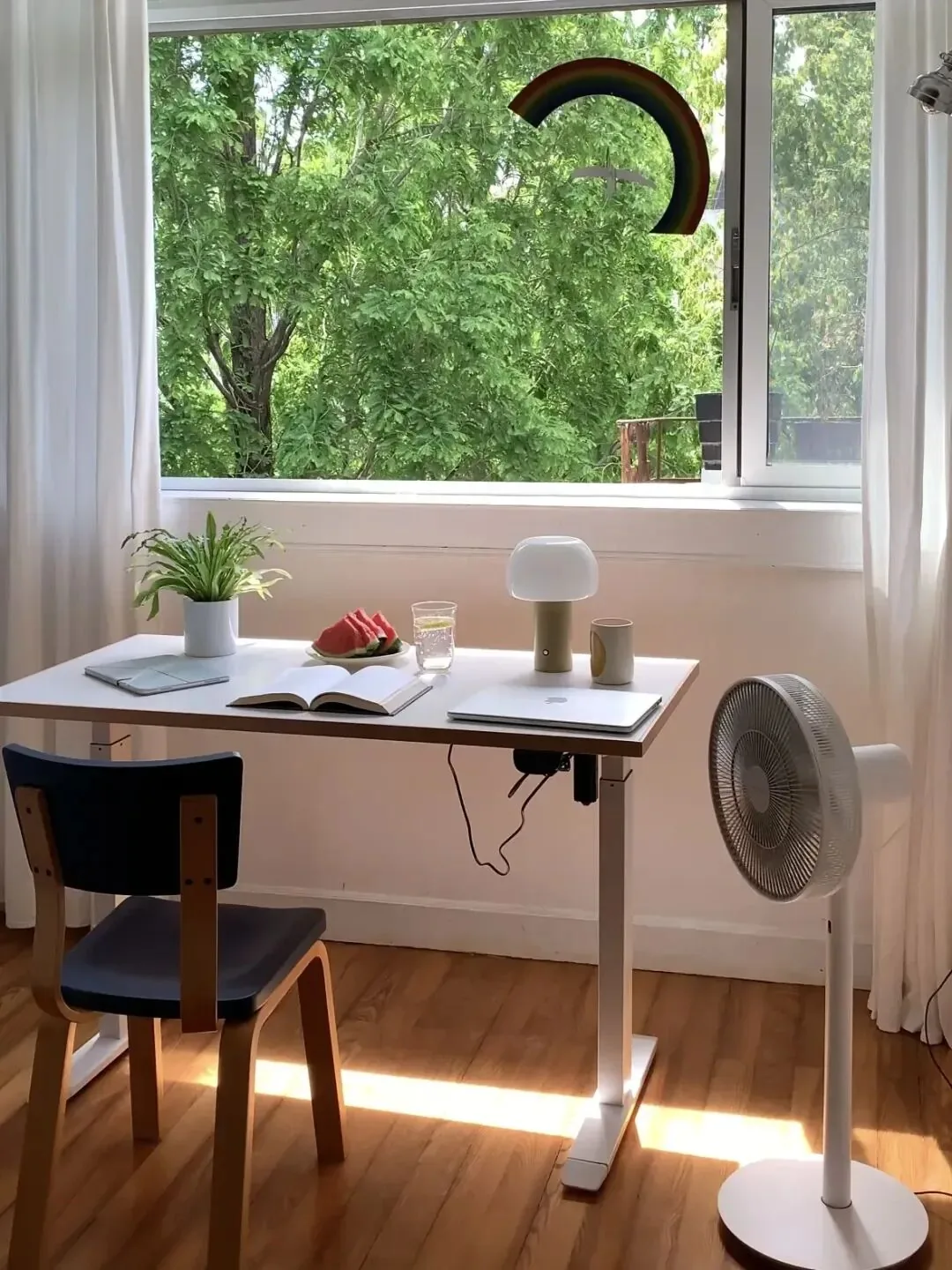
A work place close to daylight
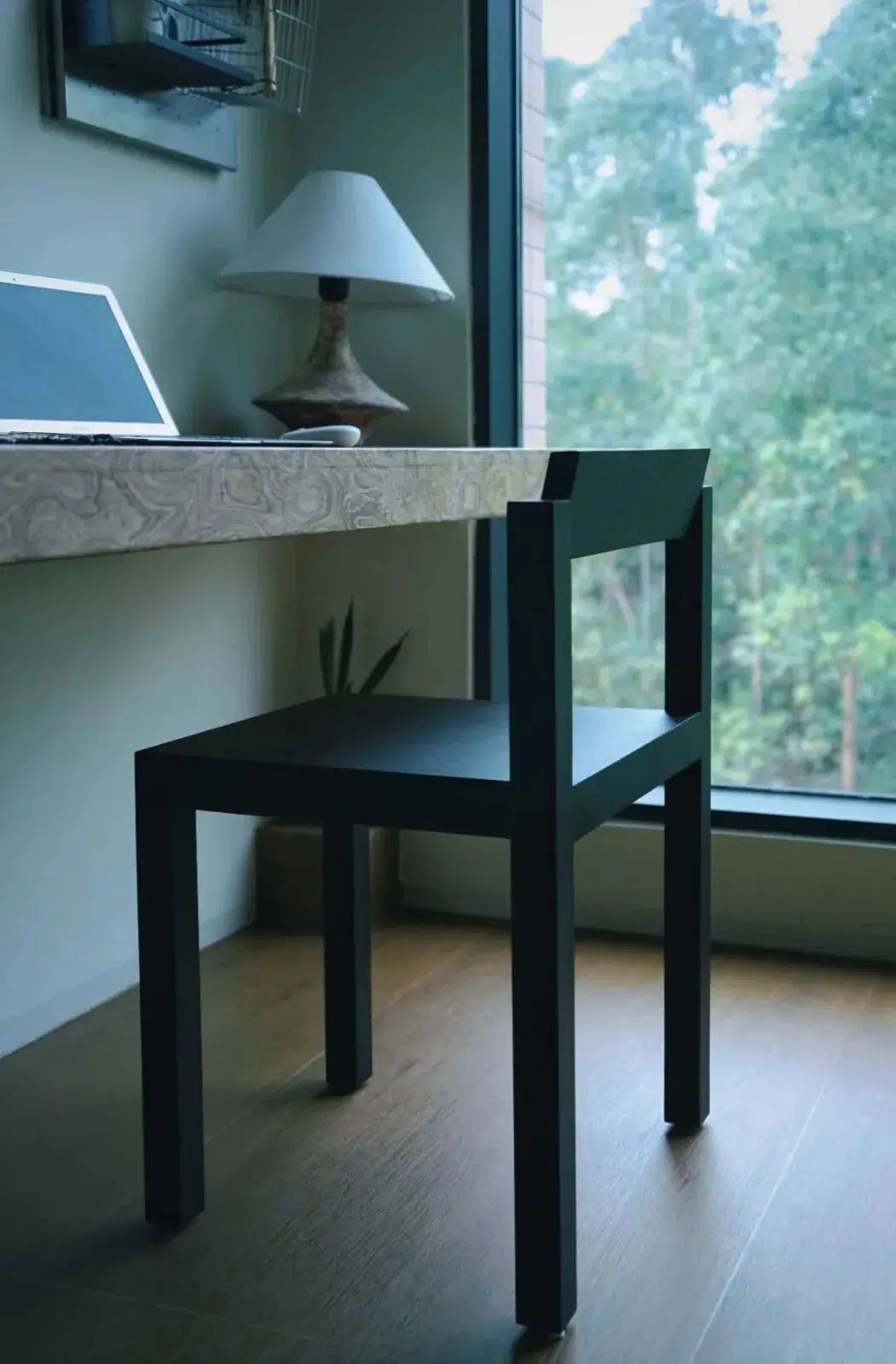
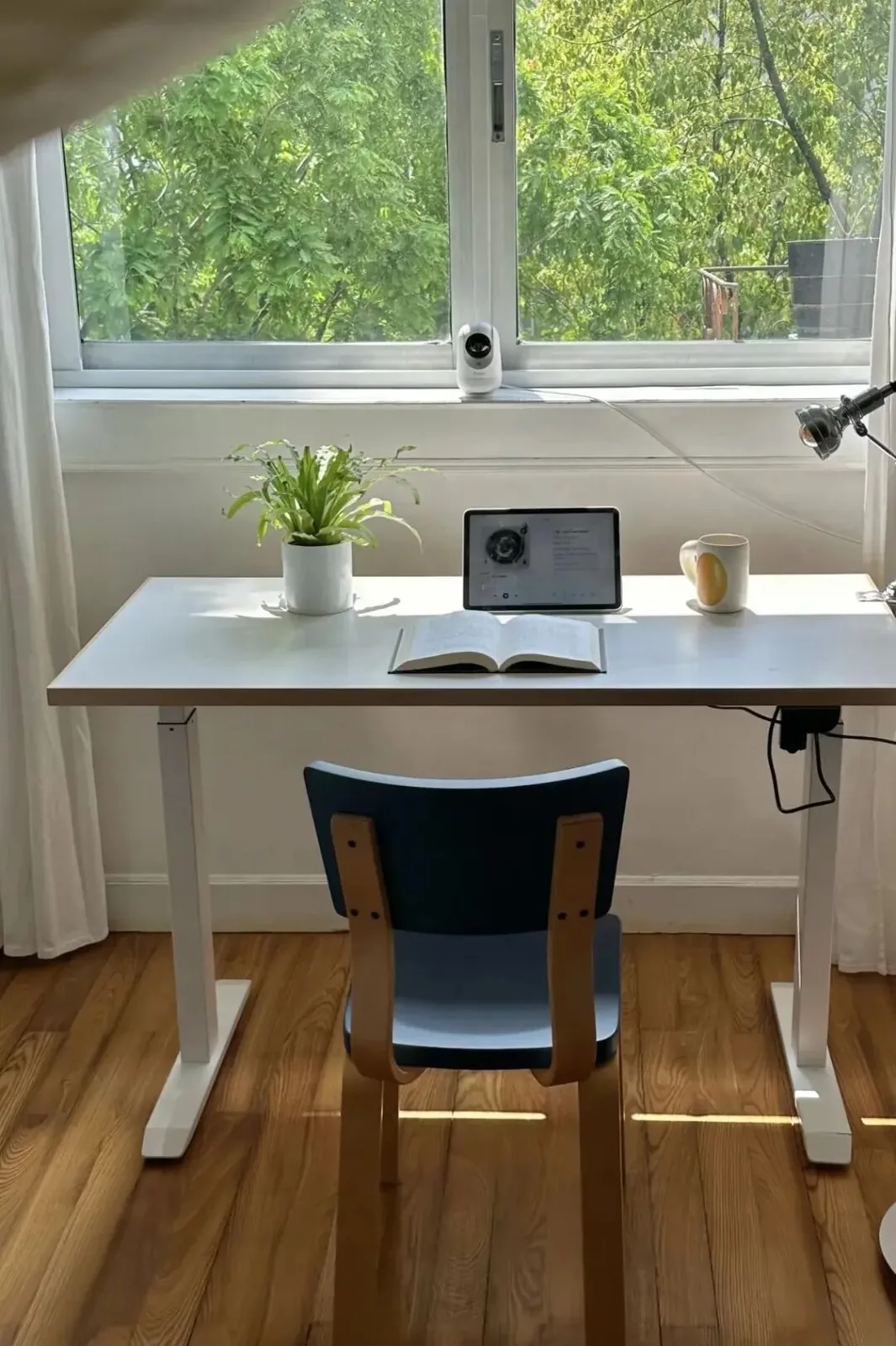
The Top Lift Desk occupies the narrow band below the window without turning the area into a separate office. Its compact scale leaves the view open, while the Klein Chair keeps a clear, upright outline beside it. Books, a lamp and a plant make the setting feel used. Natural light becomes part of the work surface rather than simply a decorative effect.
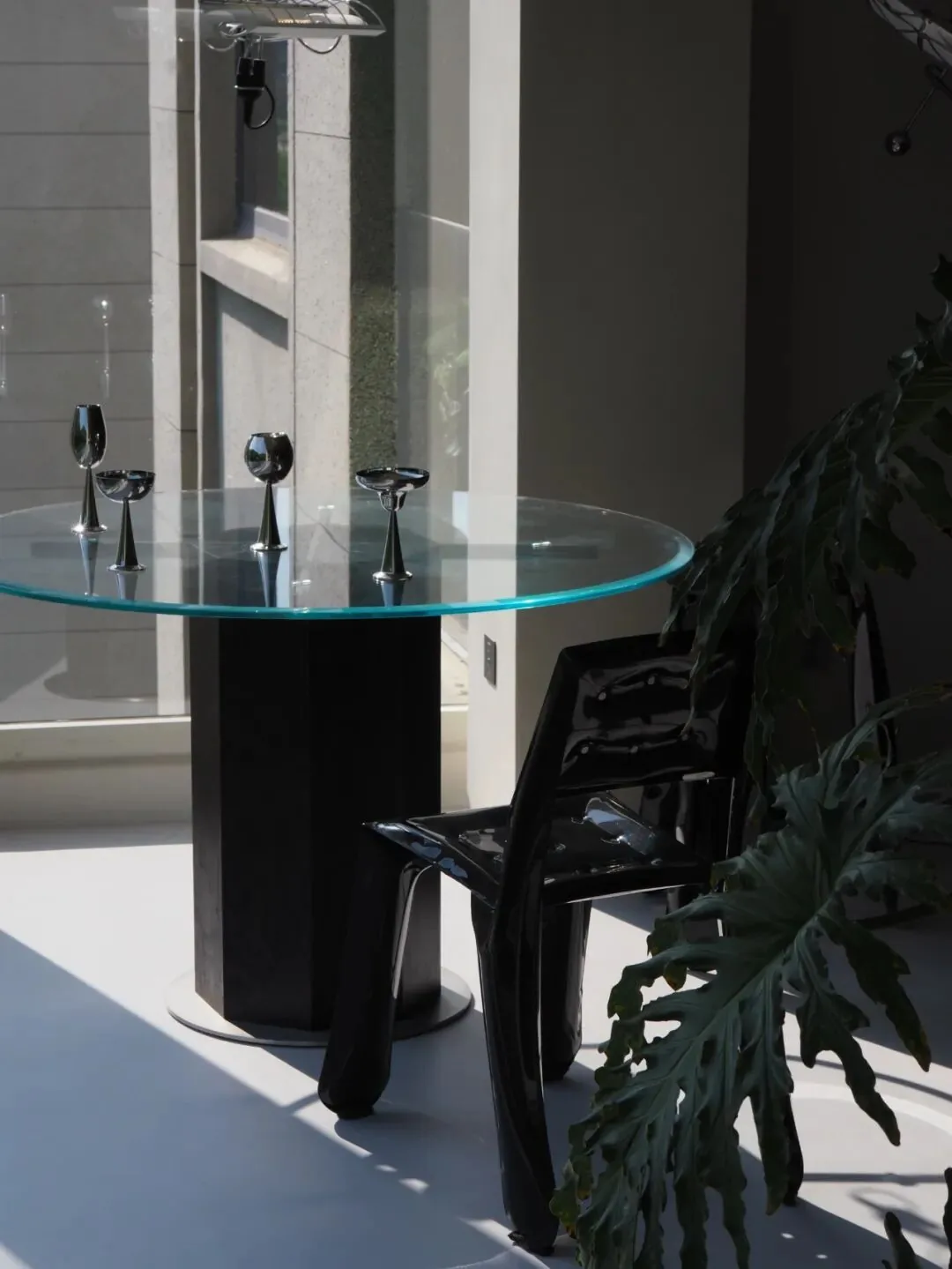
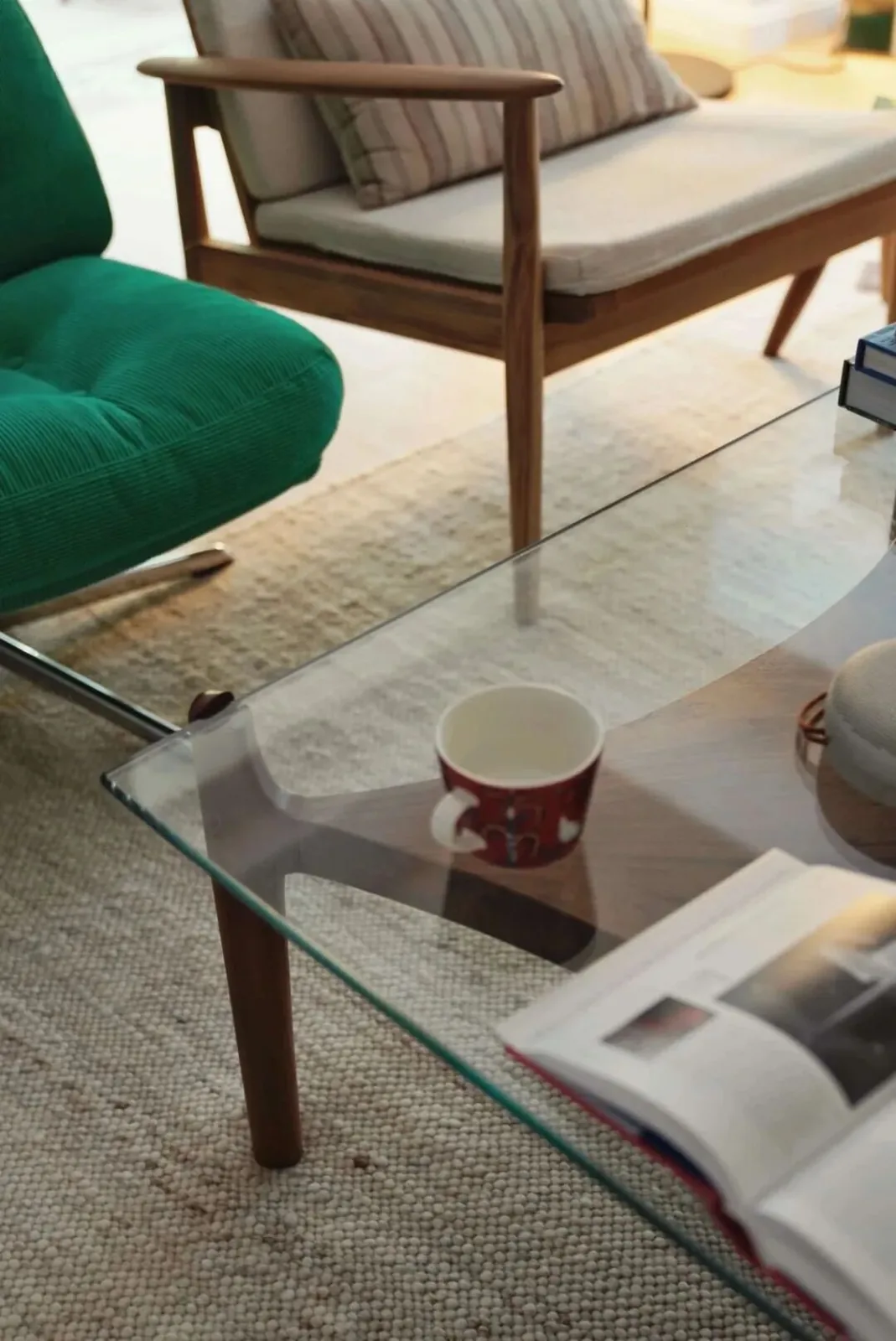
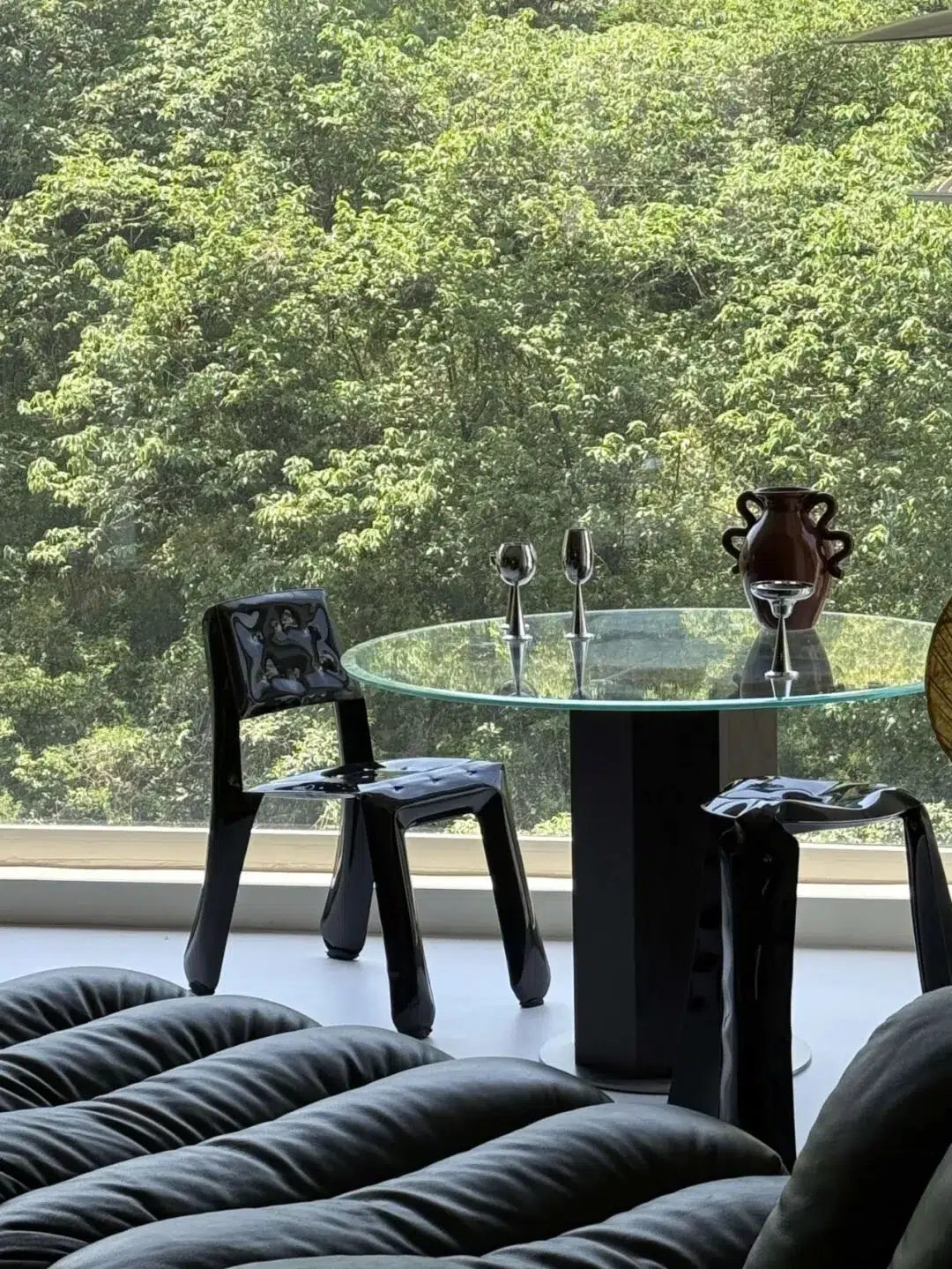
Tables hold the view in different ways
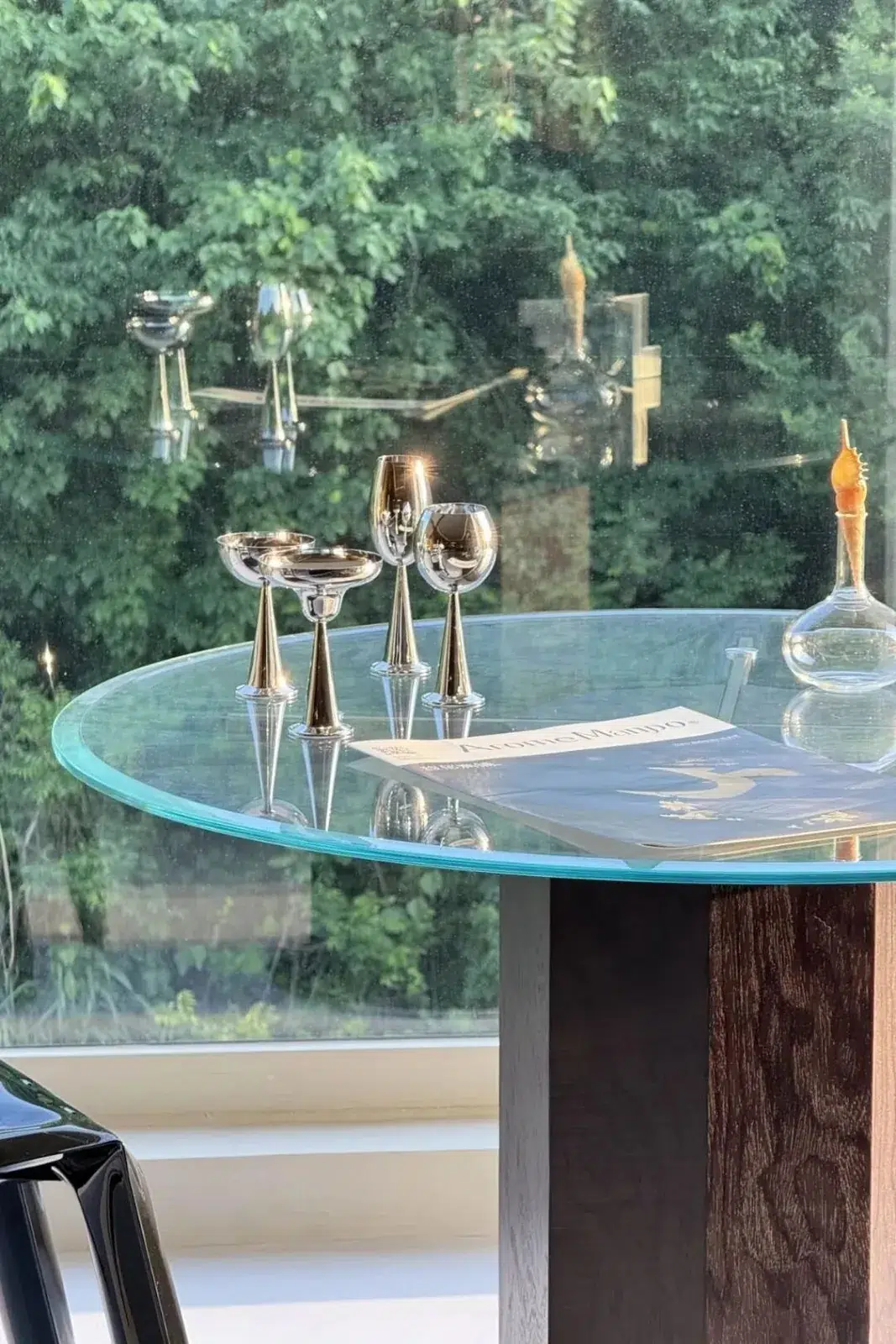
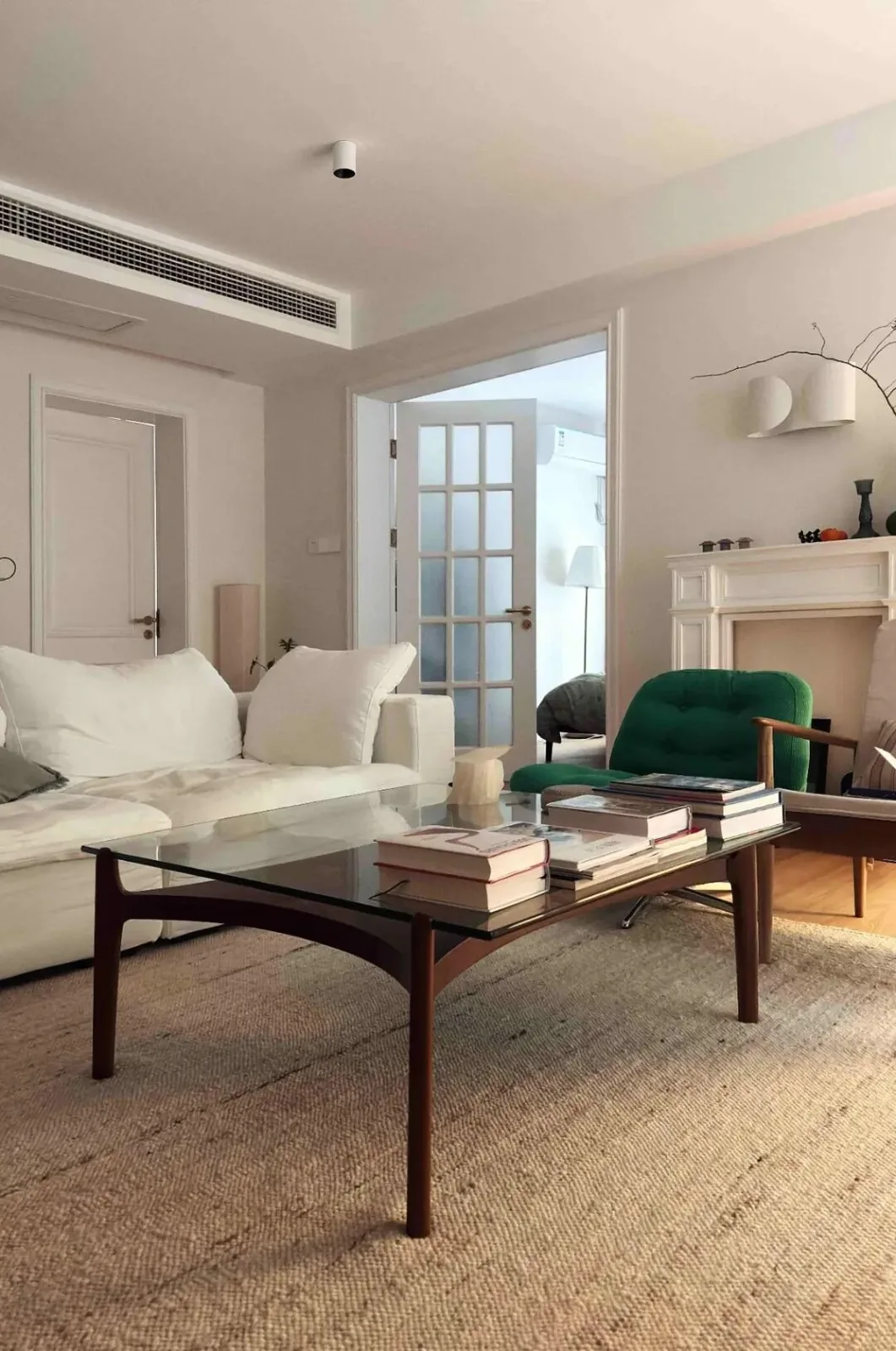
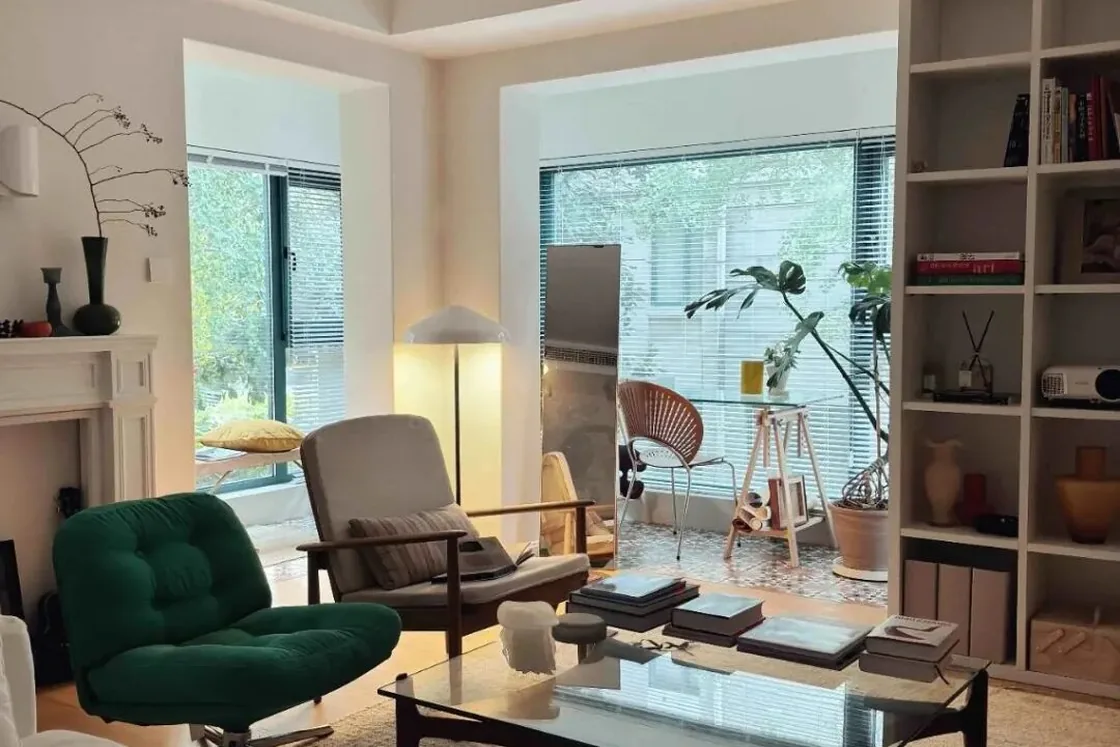
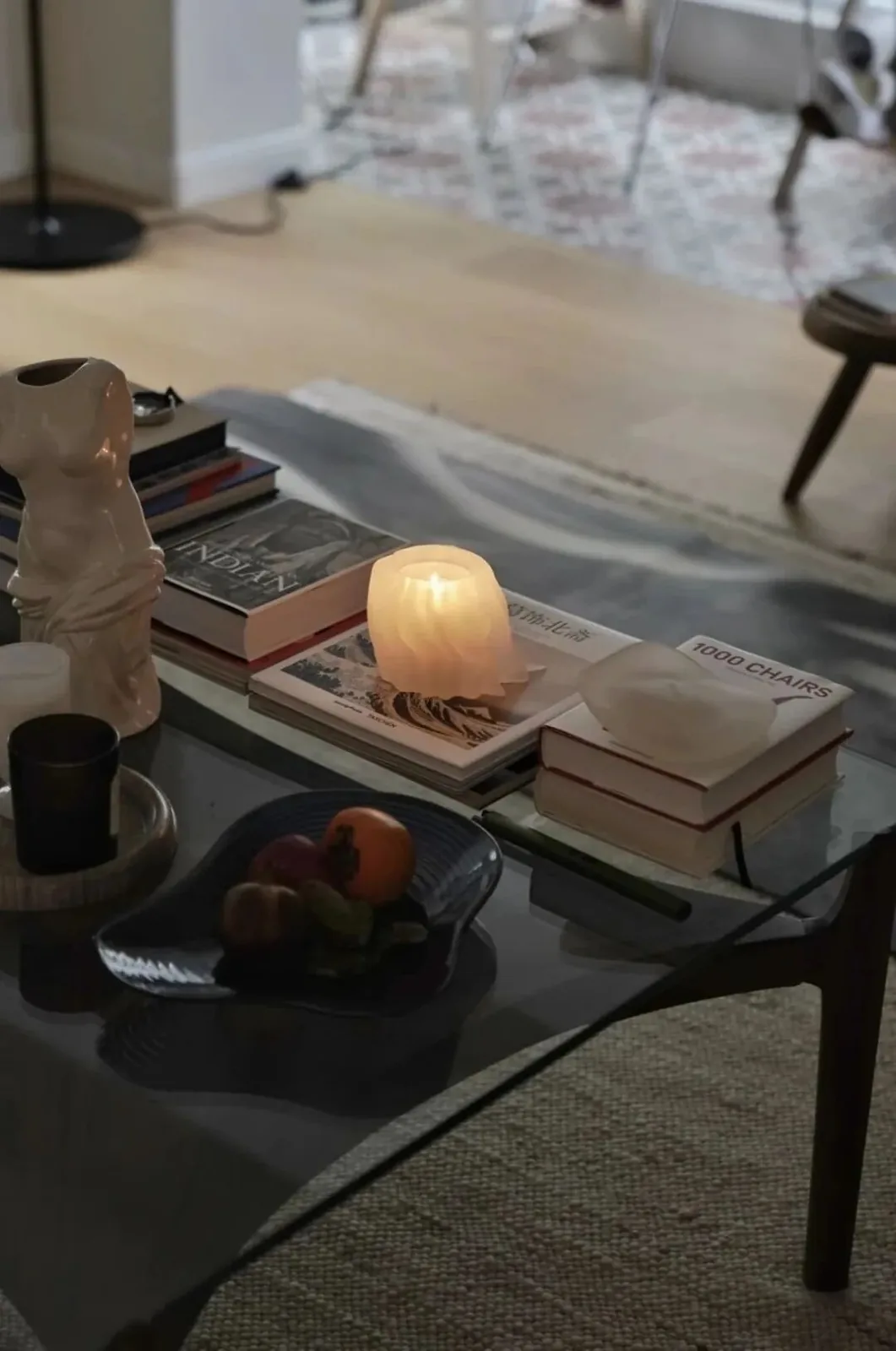
A round glass table brings the trees into the room through reflection and transparency. The low Dome Coffee Table does something quieter, connecting the seating without blocking the green chair or the window beyond it. Both examples show why placement matters: a transparent surface can still create a strong centre when its shape, objects and surrounding seats are read together.
The room changes with the light
During the day, the furniture edges are crisp against the bright glass. Later, books, candles and reflected highlights make the coffee table more visible. The pieces do not need to move for the room to feel different. This slow change is what gives the interior its character. Planning furniture by a window therefore means considering the view, the path through the room and the light at more than one hour.