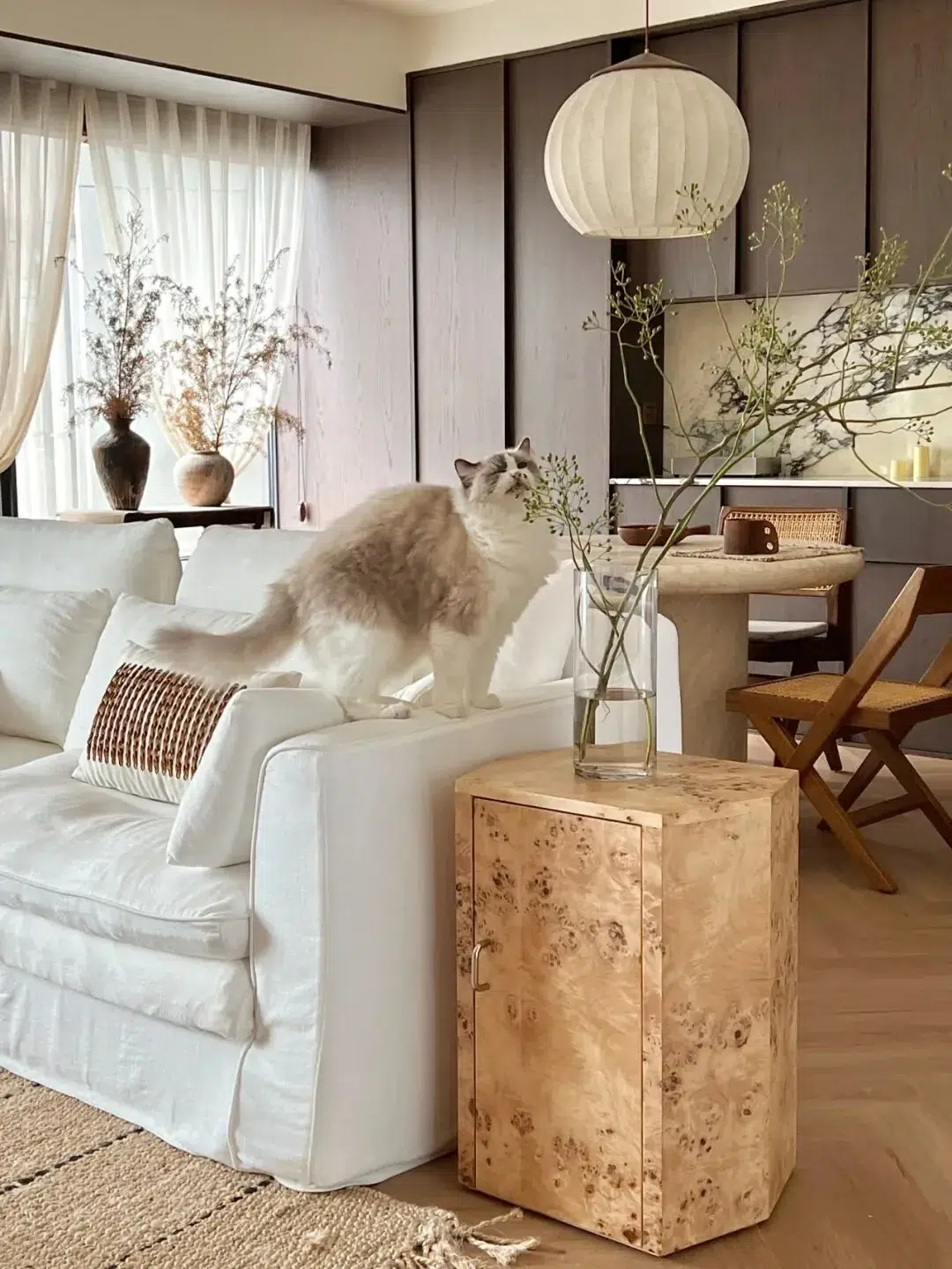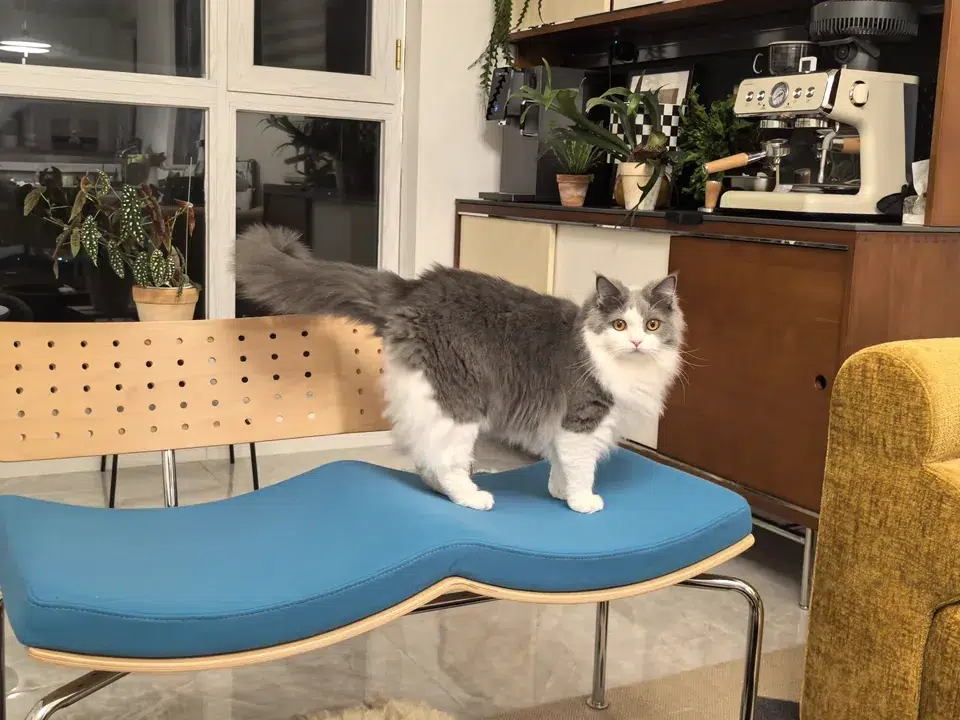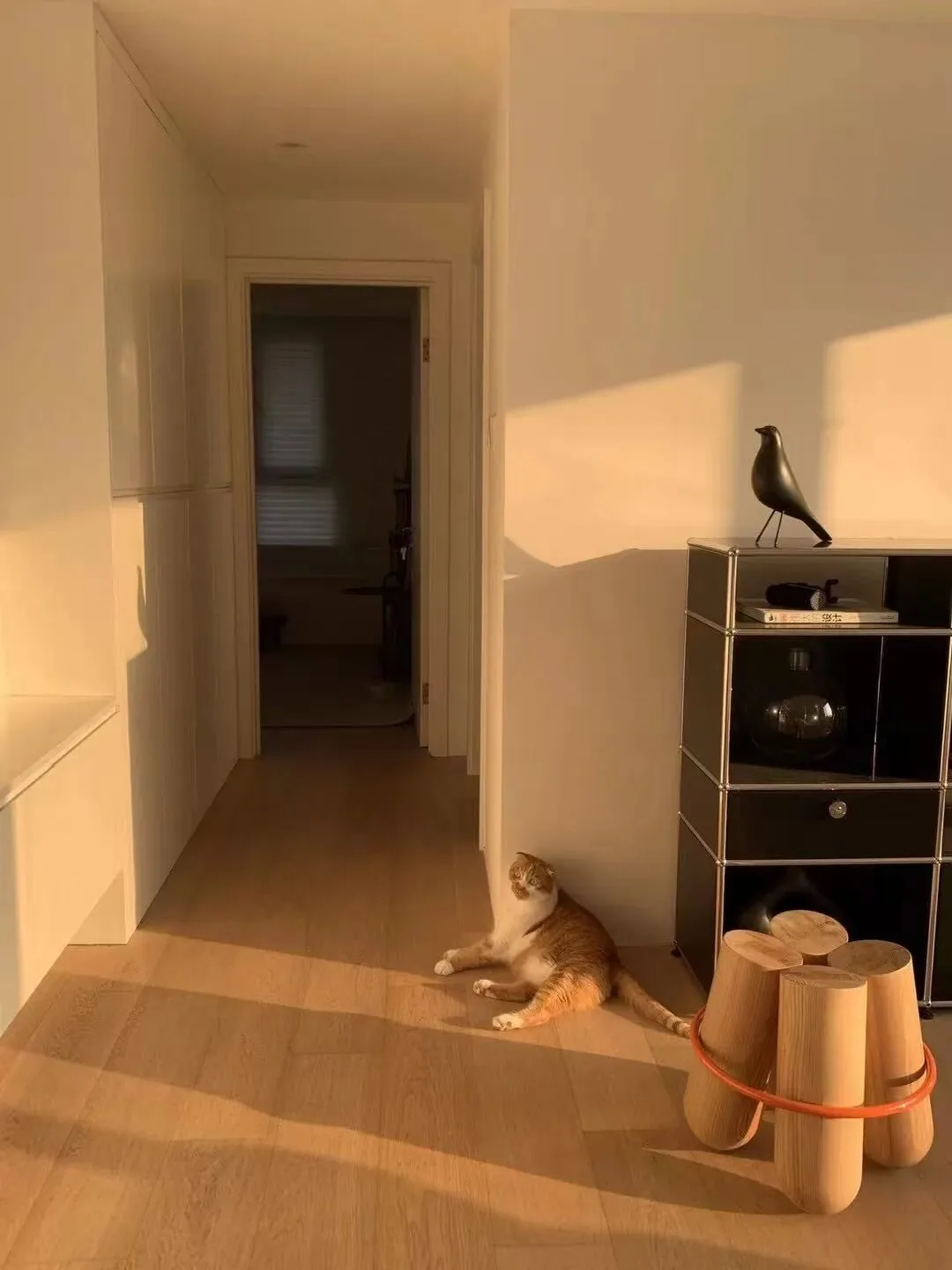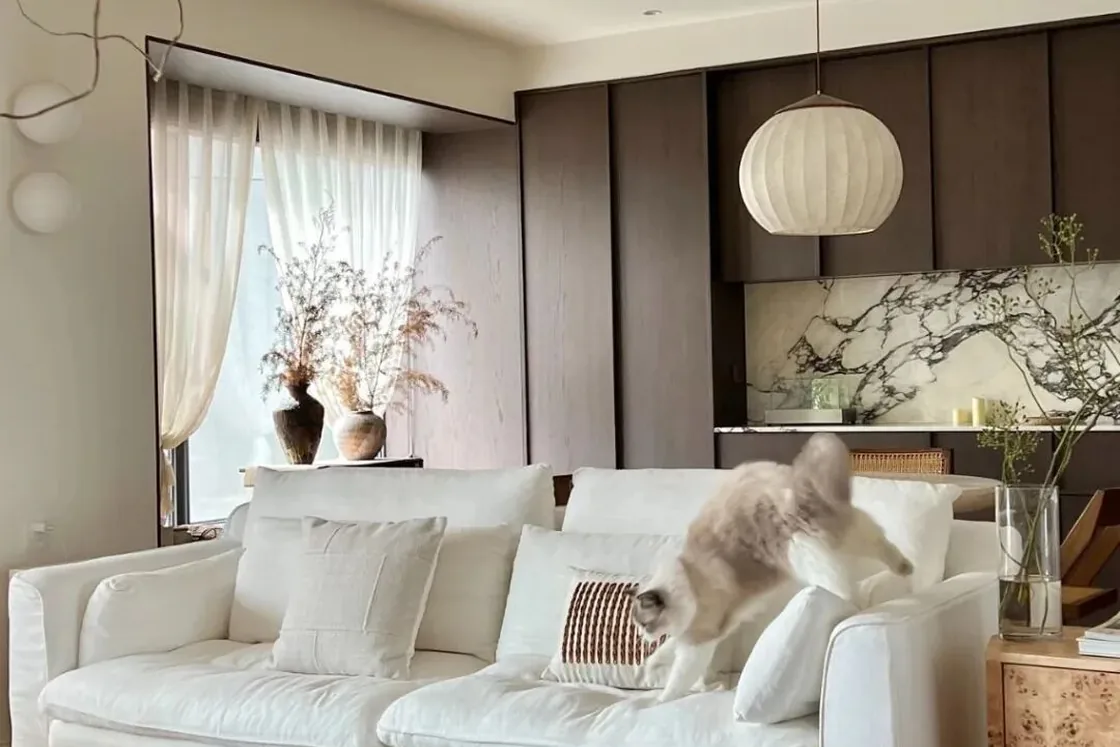
This is not a room arranged for a single photograph. Cats move from the sofa to a chair, pause on the bench and investigate the desk by the window. The furniture becomes part of those daily routes. Seen together, the images show a home shaped by repeated habits rather than a separate space designed around the animals.
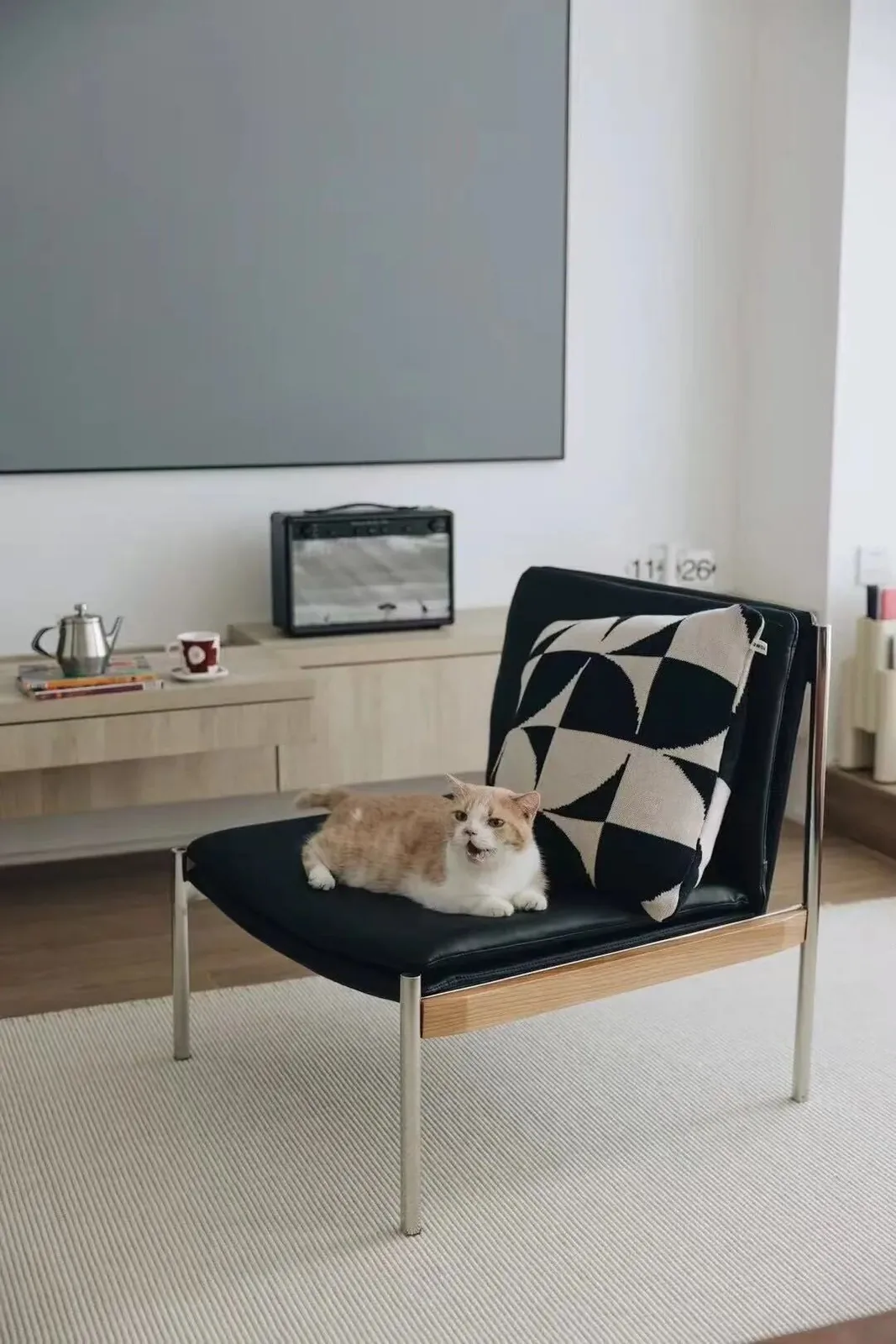
Seats become shared places
The Bauhaus Armchair and Flying Bench appear as ordinary parts of the room, but the cats quickly make them their own. A curved seat, an open view across the room and a familiar position near people can matter as much as the name of the object. These scenes are useful because they show furniture after it has entered everyday life, not only at the moment it is styled.
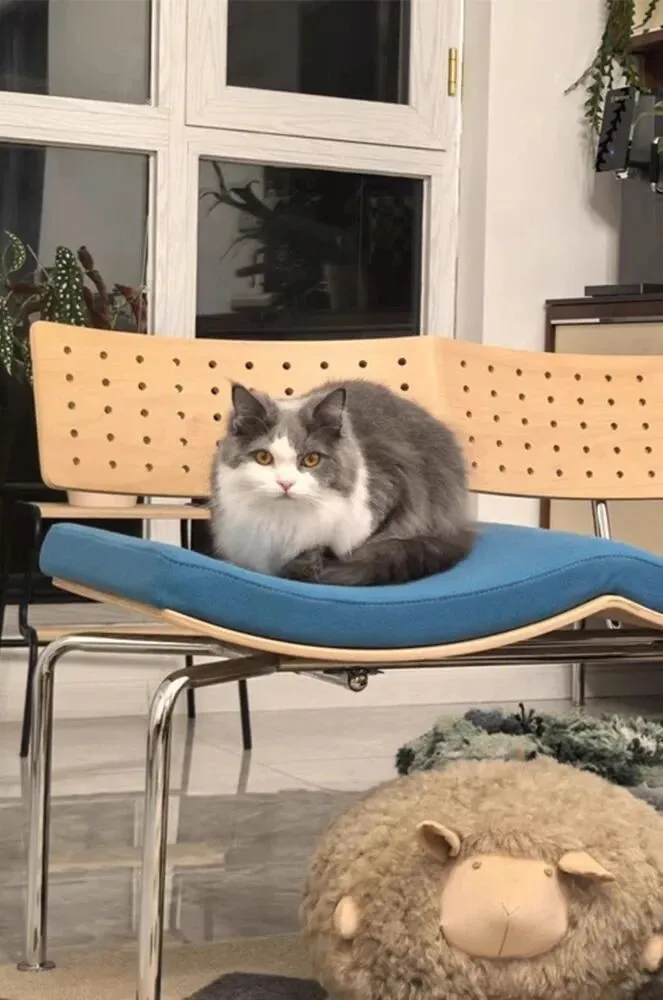
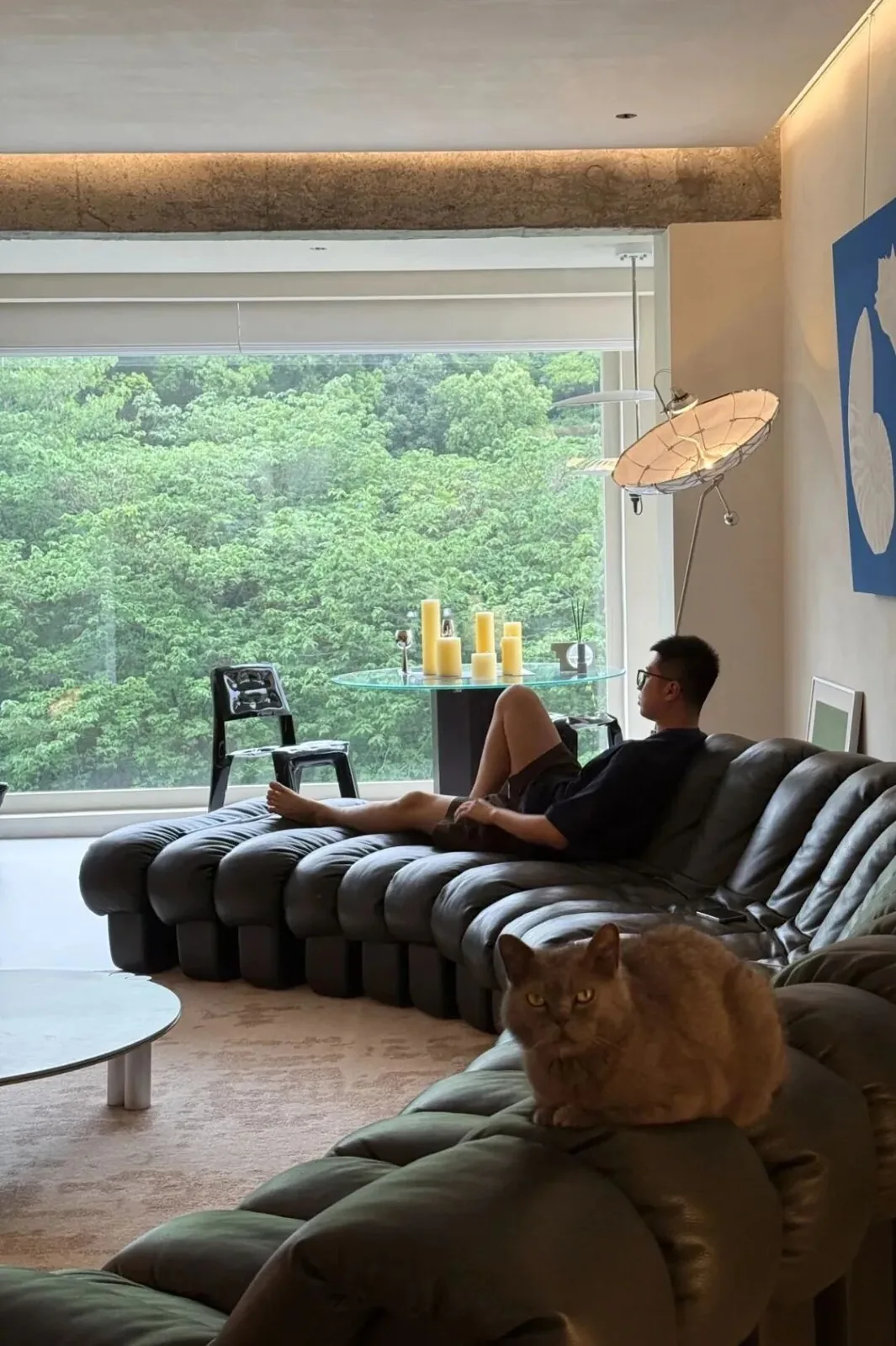
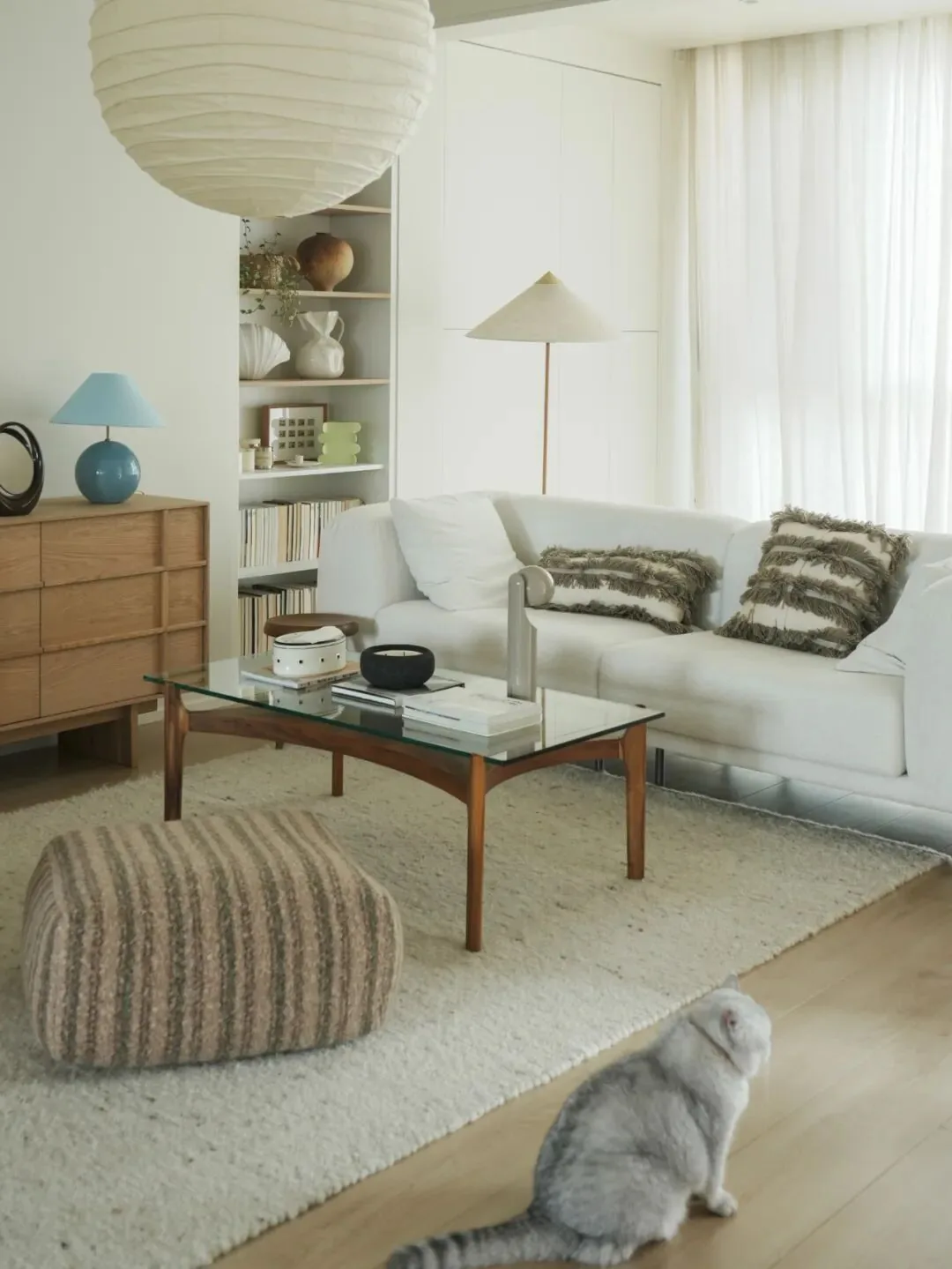
The window sets a daily rhythm
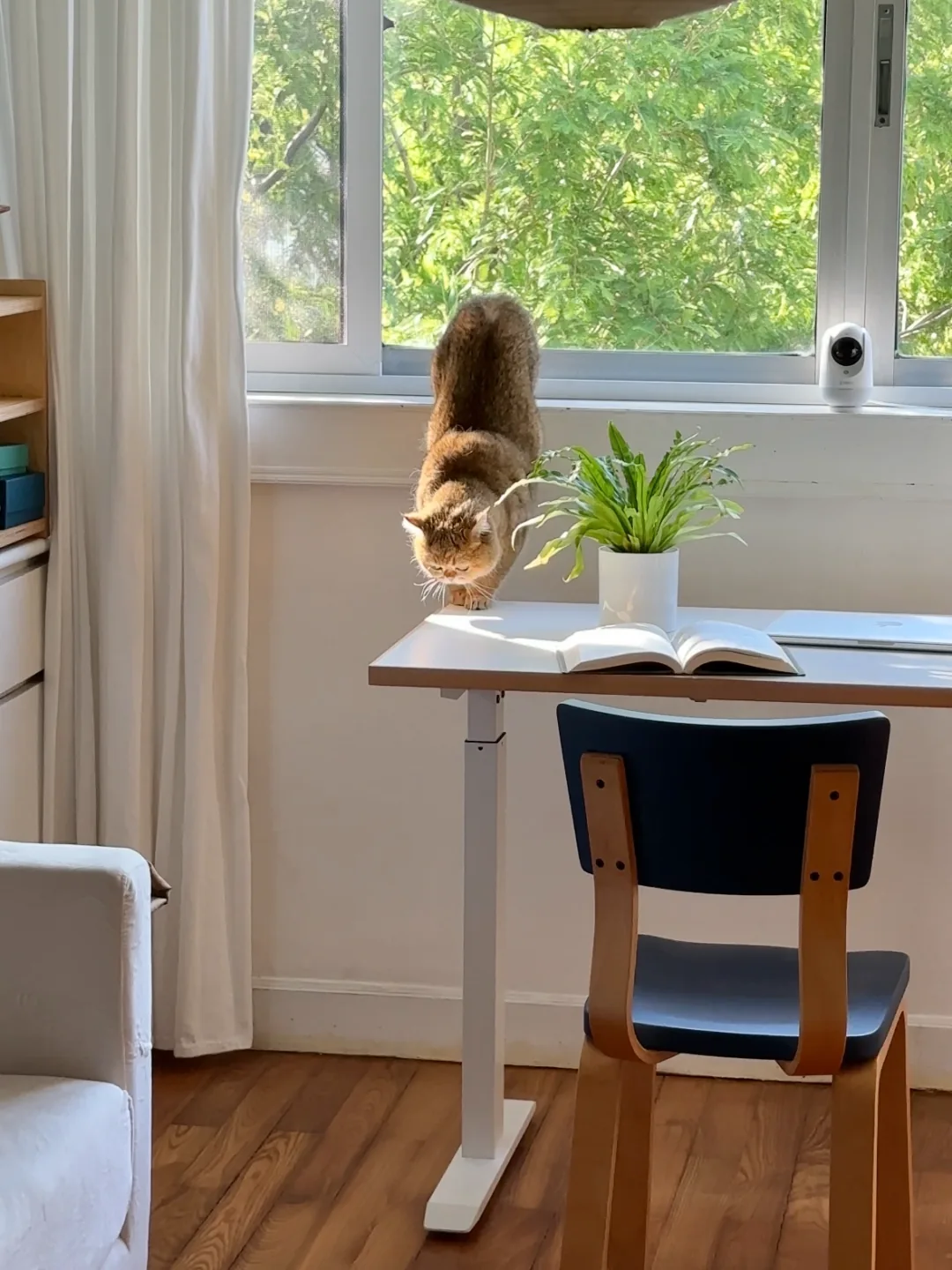
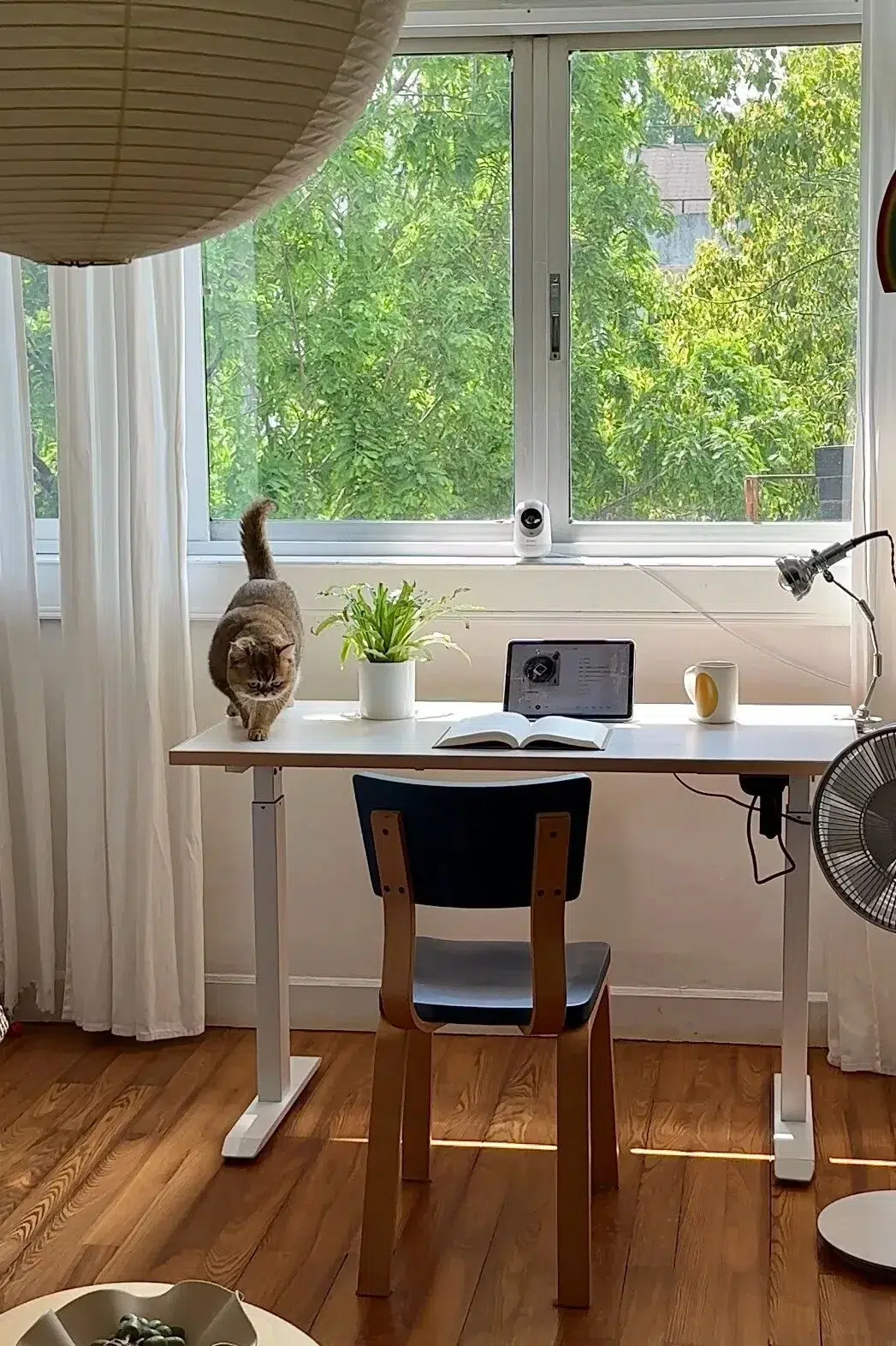
At the Top Lift Desk, the window brings together work, changing daylight and the cats’ curiosity. The same surface may hold a laptop, books and a plant while also becoming a place to look outside. Nothing in the room needs to perform only one role. The layout works through overlap: people sit, cats climb and the furniture quietly supports both activities.
A lived-in room keeps changing
Morning light, evening shadows and small movements make the furniture read differently throughout the day. The glass coffee table almost disappears in one view and becomes a layer of reflections in another. A compact side piece becomes a stopping point beside the sofa. The story is less about a perfect arrangement than about allowing enough openness for the room to adapt without losing its calm character.