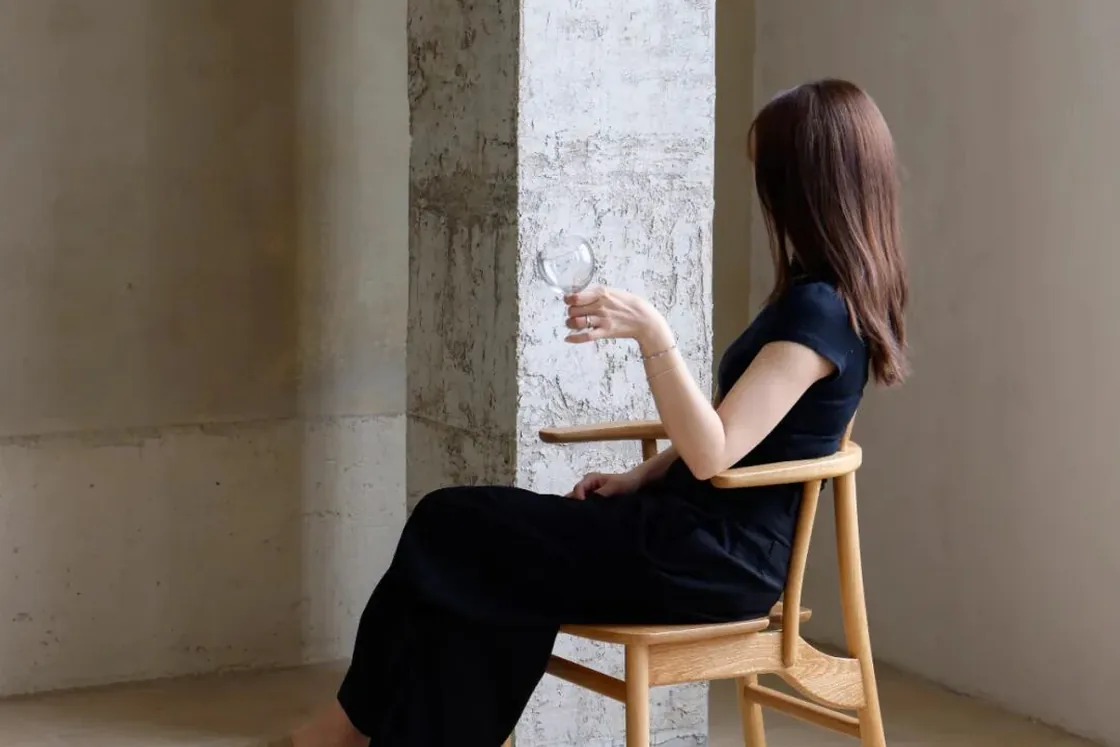
Solid wood and wood veneer are different construction approaches, not a simple good-versus-bad choice. Solid wood can express structure through shaped rails, arms and joints. Veneer can carry a controlled grain pattern across a broad surface or a compact geometric form. The right specification depends on the product construction, finish direction and details the project needs to keep consistent.
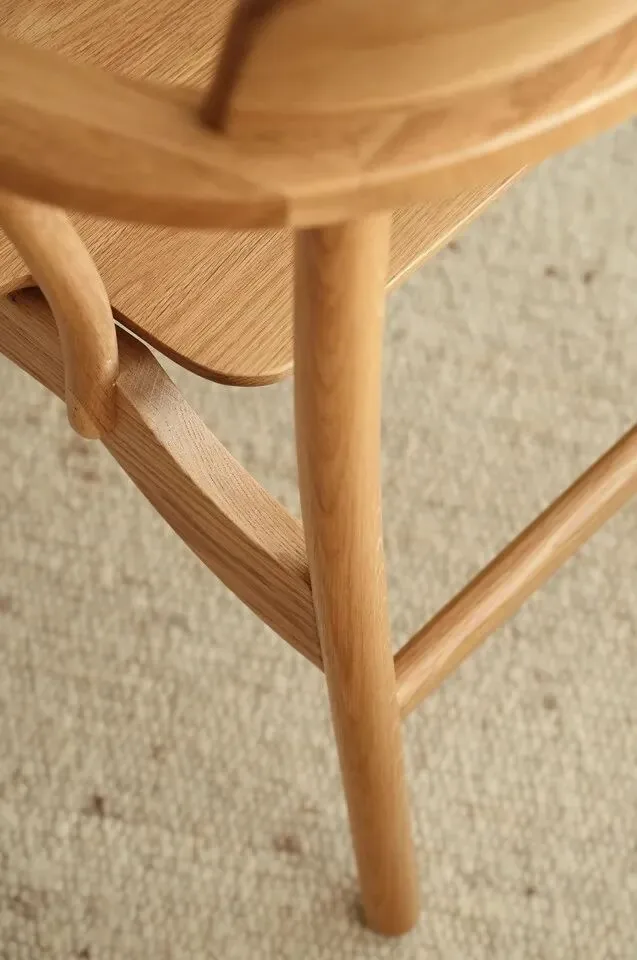
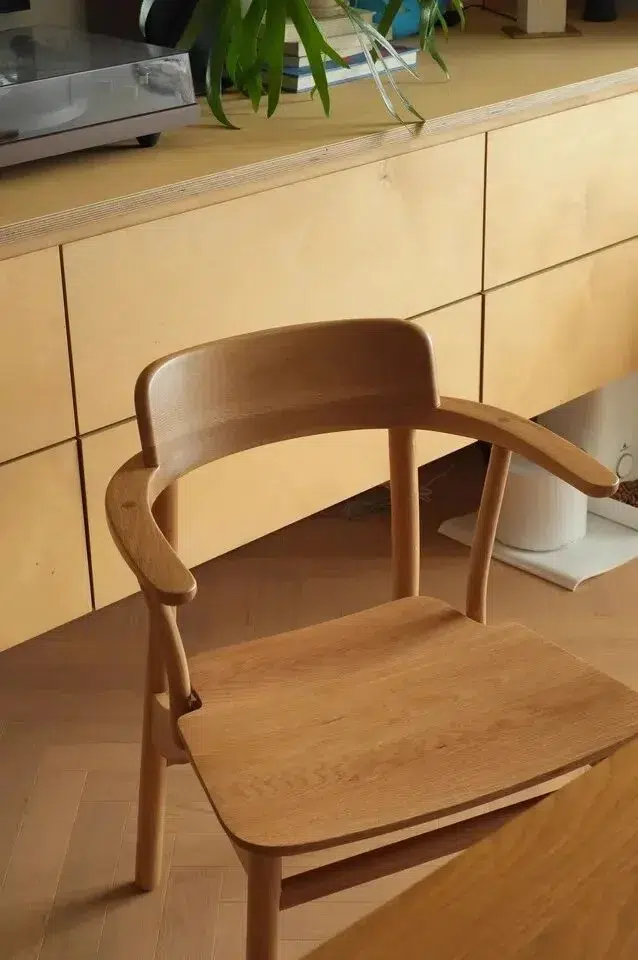
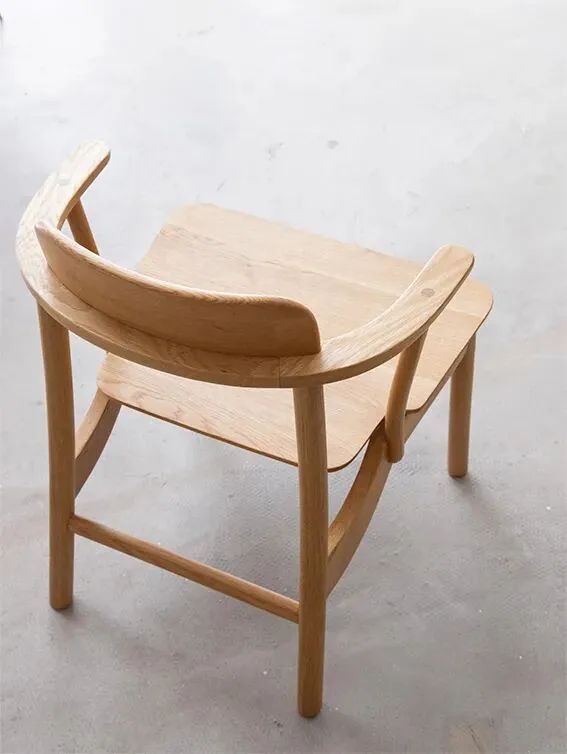
Solid wood makes structure visible
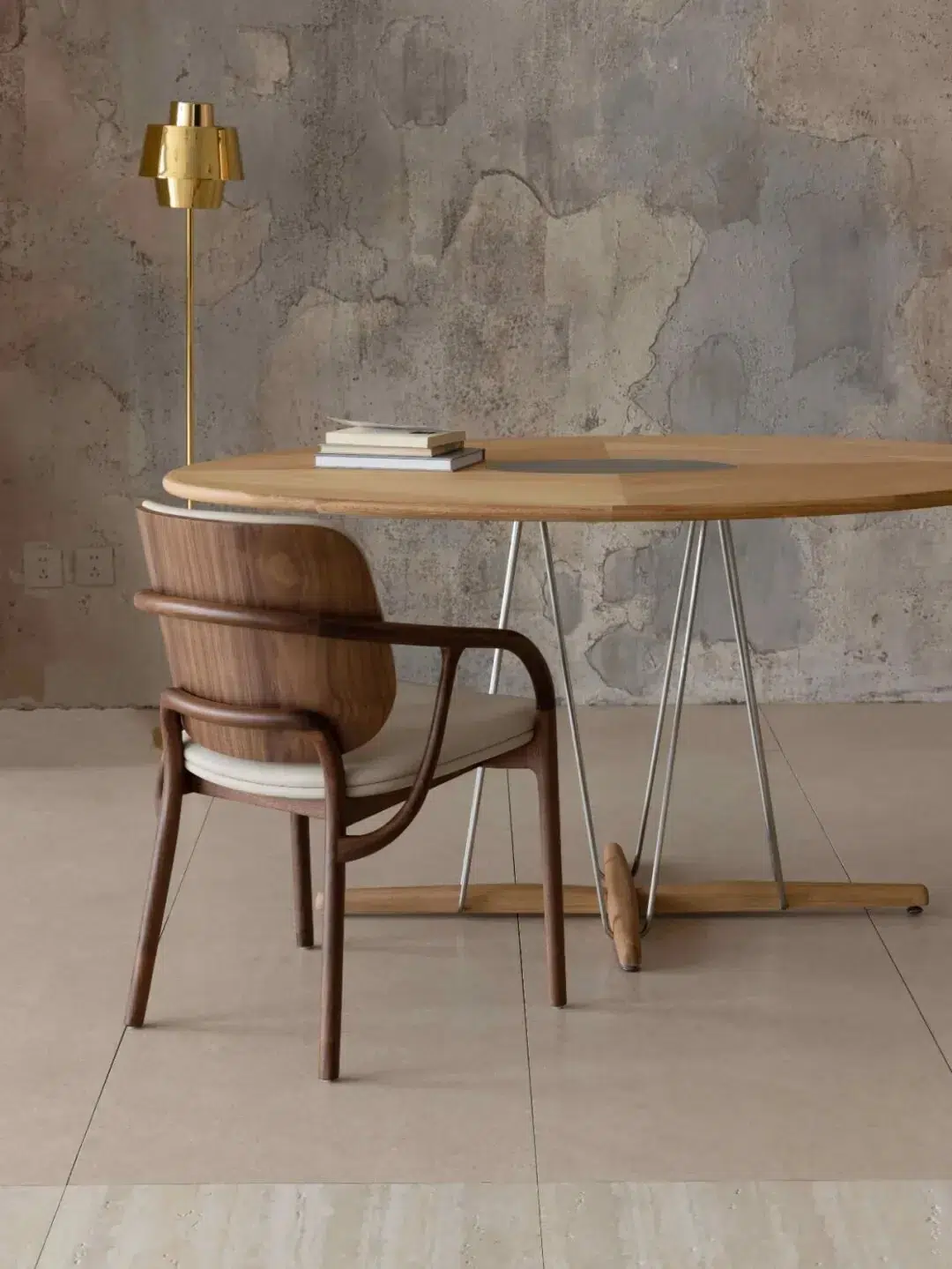
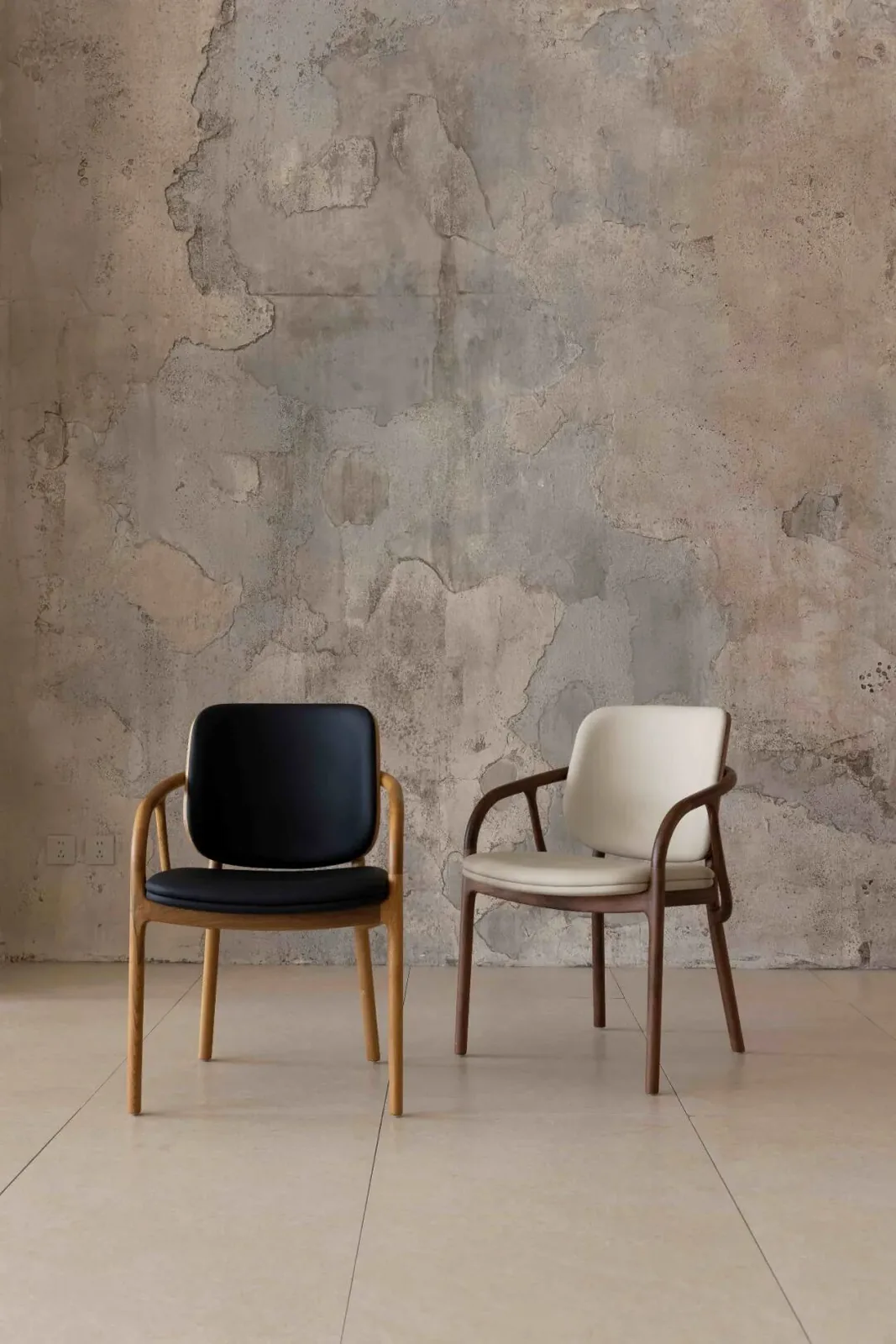
The Crown Chair is offered in source-listed white oak or black walnut solid-wood construction. Its curved back and arms make the frame part of the visual character. The Mufan Chair likewise uses a solid white-oak or black-walnut frame with upholstery options. In both examples, the direction and tone of the wood remain closely tied to the chair silhouette.
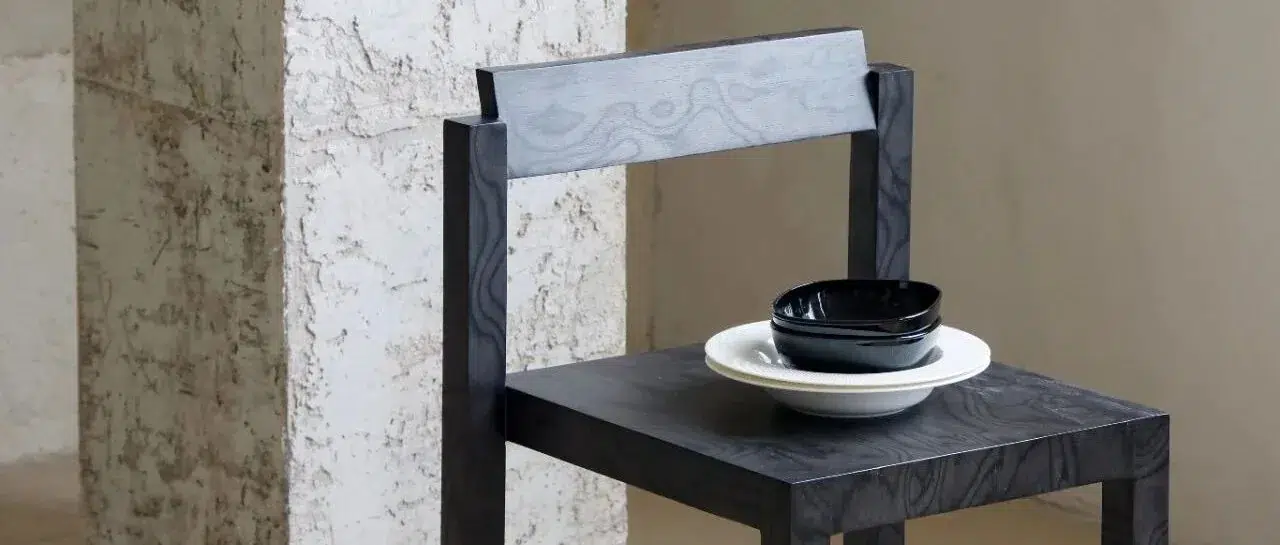
Veneer can organise a surface
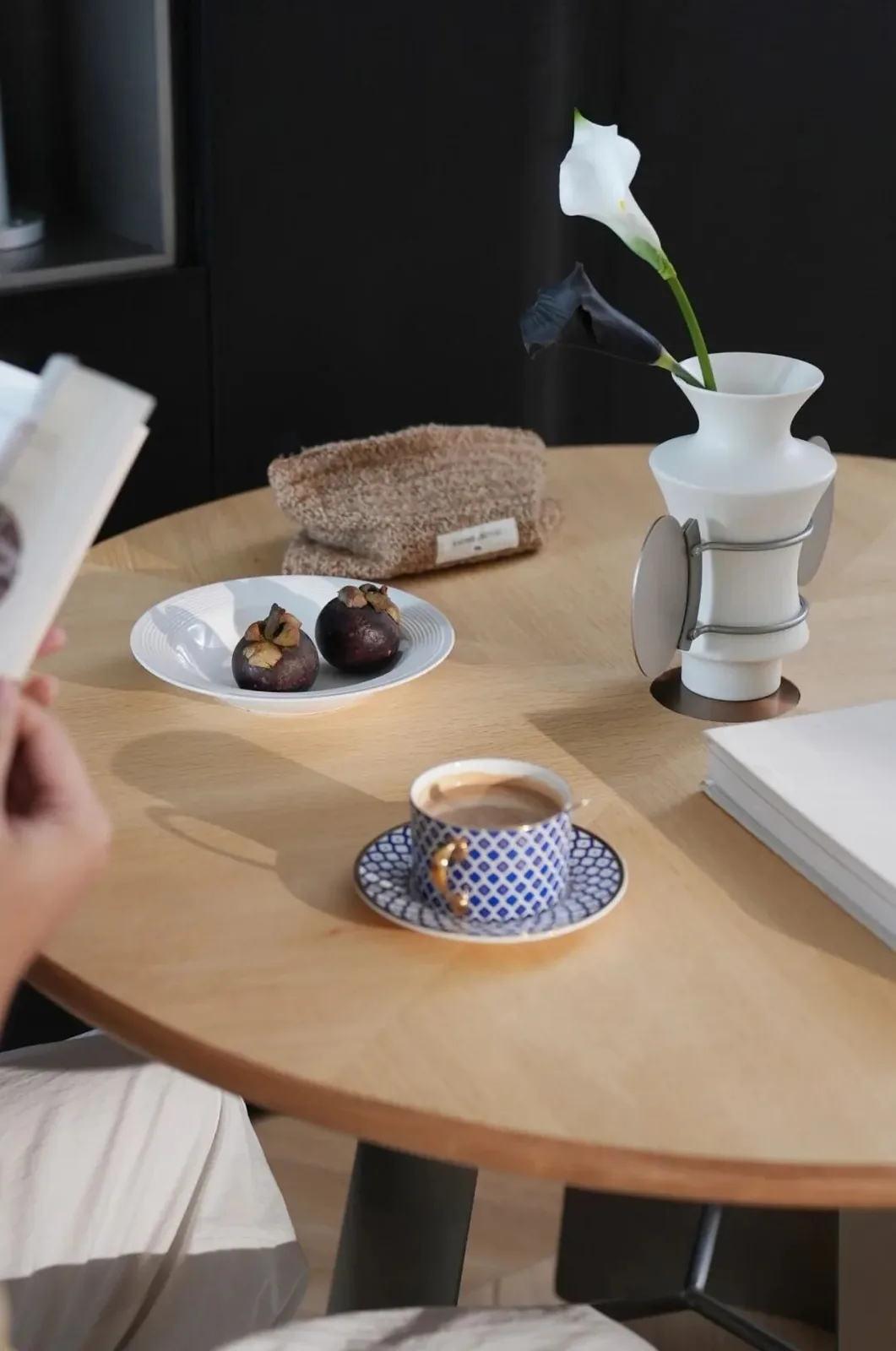
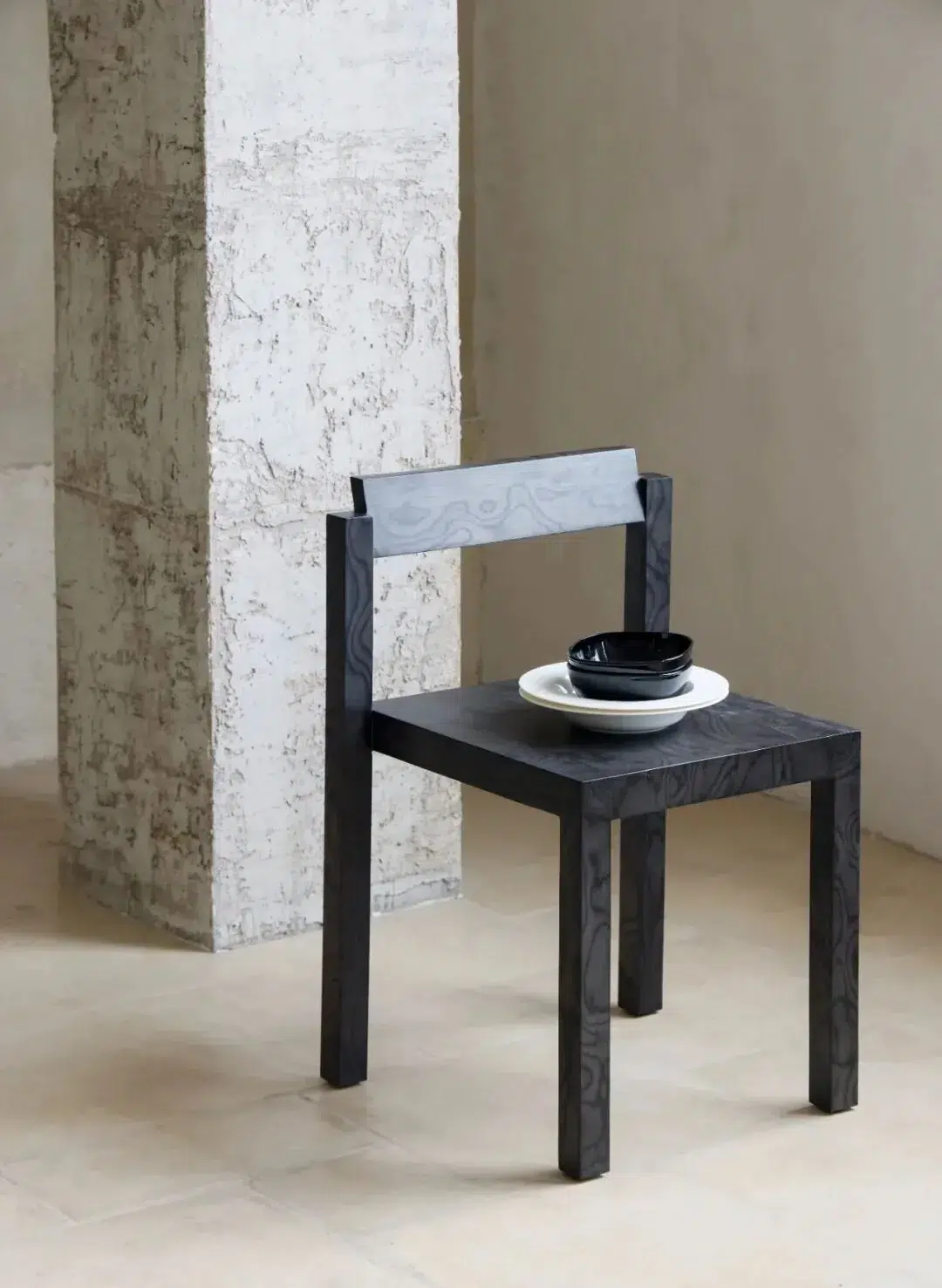
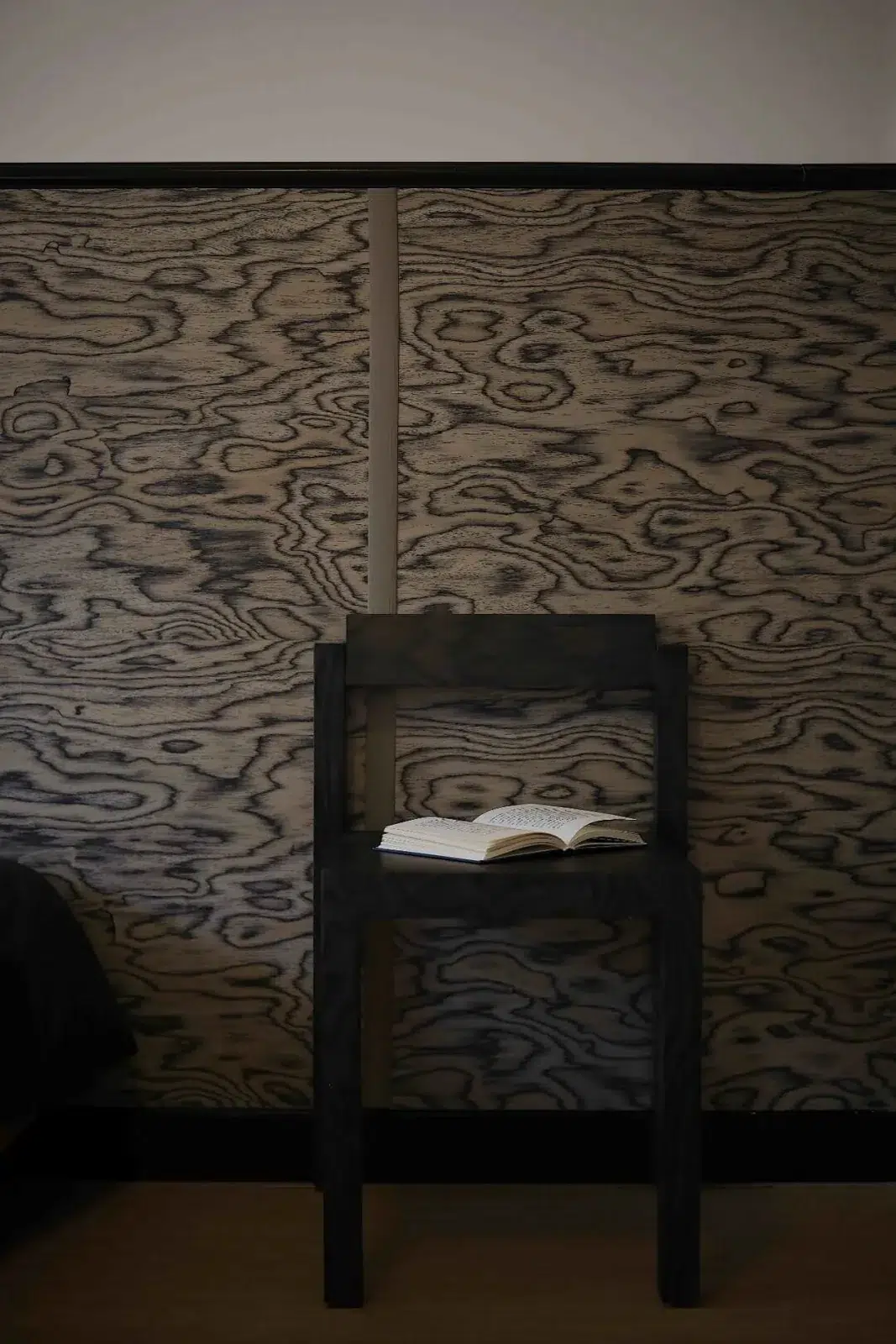
The Klein Chair uses a birch frame surfaced in natural poplar-burl veneer or black zebra engineered veneer. The pattern becomes the main expression of its compact geometry. On the Monet Round Table — Wood Top, a plywood top carries white-oak parquet veneer with solid white-oak edging, separating the broad surface from the edge detail.
Specify the complete build-up
For either material, confirm the species or veneer type, substrate where applicable, edge treatment, finish sample and acceptable natural variation. Review the same information across every item in a furniture package, especially when chairs and tables must share one colour direction. A physical finish sample remains the clearest reference before production quantities are approved.